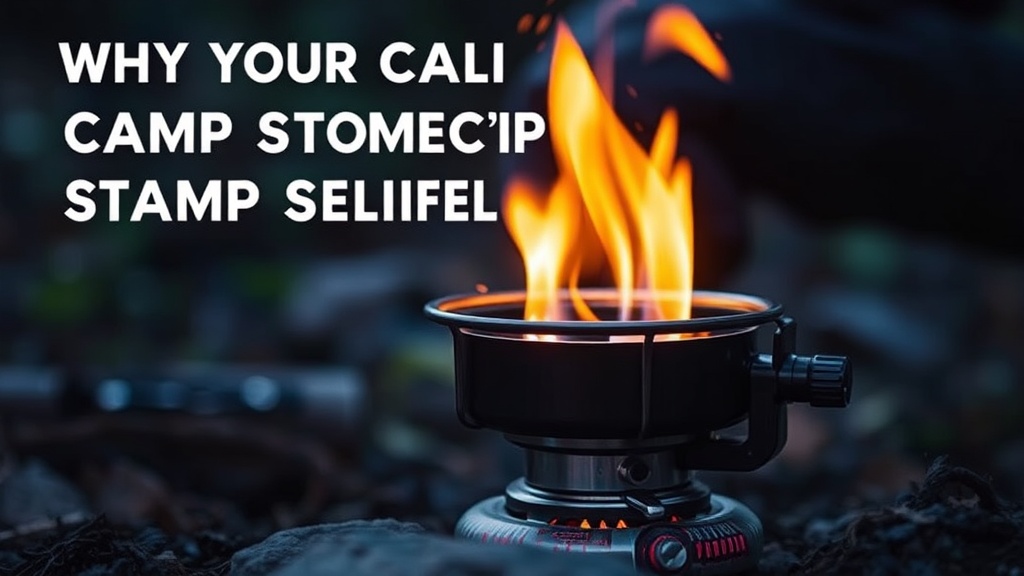
Why Your Camp Stove Flame Keeps Flickering

Have you ever been in the middle of boiling water for your morning coffee only to have your stove flame sputter and die?
A flickering or dying camp stove flame is more than just a minor annoyance; it is a functional failure that can derail your morning routine or even leave you unable to cook a warm meal during a cold night at a campsite like Joshua Tree or the Smoky Mountains. This guide identifies the most common culprits behind unstable flames—from fuel issues to mechanical blockages—and provides a systematic troubleshooting checklist to get your cooking back on track. Understanding these variables will help you maintain your gear and ensure your next family camping trip remains stress-free.
Check Your Fuel Source First
Before you begin dismantling your stove to look for mechanical failures, you must verify that your fuel source is functioning correctly. Most camp stoves run on either isobutane-propane canisters (like the Jetboil or MSR canisters) or liquid fuel (like Coleman white gas). The type of fuel you use and how you handle it significantly impacts flame stability.
Temperature Fluctuations
If you are camping in high-altitude or colder environments, such as the Sierra Nevada mountains, the pressure inside your fuel canister drops as the temperature decreases. This drop in pressure leads to a weak, flickering flame. If you notice your stove struggling in the cold, try warming the canister. You can do this by placing the canister in a bowl of lukewarm water (never boiling water) or by keeping it inside your jacket near your body heat. Avoid using direct flame to heat a canister, as this is a major safety hazard.
Fuel Depletion and Gas Mix
As a canister nears the end of its life, the internal pressure becomes inconsistent. If you are using a pre-mixed fuel canister, the ratio of butane to propane may shift as the gas is consumed. If your stove is a liquid fuel model, ensure you have properly "primed" the stove. If the priming process is incomplete, the stove will struggle to maintain a steady flow of fuel to the burner, resulting in a flame that dances or cuts out unexpectedly.
Inspect the Burner Head and Orifice
The most common physical cause of a flickering flame is a dirty or clogged burner head. During a camping trip, small particles like food debris, ash, or even wind-blown sand can enter the burner assembly. Even a microscopic piece of grit can disrupt the flow of gas and cause turbulence in the flame.
Cleaning the Burner
Use a soft-bristled brush or a can of compressed air to clear out any visible debris from the burner ports. If you see signs of carbon buildup—black, soot-like residue—this is a clear indicator that the fuel is not burning cleanly. This can happen if the air-to-fuel ratio is incorrect. Use a small needle or a specialized stove cleaning tool to gently clear the tiny holes in the burner head. Be extremely careful not to enlarge the holes, as this will permanently change the gas flow rate and can make the stove unsafe to use.
The Orifice Blockage
The orifice is the tiny nozzle that regulates the amount of gas entering the burner. It is much harder to reach than the burner head, but it is a frequent culprit for inconsistent flames. If you have cleaned the burner head and the flame is still sputtering, the orifice may be partially blocked by a tiny speck of dust or even a small insect. If you are comfortable with basic mechanical maintenance, you can often clear this using a fine wire or a specialized cleaning kit designed for your specific stove model.
Evaluate Airflow and Wind Interference
Even the most expensive high-end stove can struggle if the environment isn't controlled. If you are camping in a windy area, such as a coastal campsite or an open ridge, the wind can physically push the flame away from the burner, causing it to flicker or extinguish entirely. This is not a mechanical failure of the stove, but a failure of your setup.
Use a Windscreen Effectively
A windscreen is essential for maintaining a steady flame in breezy conditions. However, there is a specific way to use one. If you place a windscreen too close to the stove, it can trap heat and cause the stove to overheat. This excess heat can actually cause the gas pressure to fluctuate wildly, leading to an unstable flame. Maintain a gap of at least two to three inches between the burner and the windscreen to allow for proper air circulation while still protecting the flame from the wind.
The Importance of Oxygen
A stove needs a precise mixture of fuel and oxygen to create a steady flame. If your stove is enclosed too tightly—perhaps by a large pot or a poorly positioned windscreen—it may be "starving" for oxygen. This creates a "lazy," yellow flame rather than a sharp, blue flame. If you notice the flame turning yellow, move your cookware or windscreen to allow more air to reach the burner.
Check the Regulator and Connections
The regulator is the component responsible for controlling the flow of gas from the canister to the burner. If the regulator is faulty or if there is a leak in the connection, the gas flow will be inconsistent, leading to a flickering or dying flame. This is a critical issue that requires immediate attention to prevent gas leaks.
Inspect the O-Ring
Most canister stoves rely on a small rubber O-ring to create a gas-tight seal between the canister and the stove. If this O-ring is cracked, dry, or missing, gas will leak out, causing the pressure to drop and the flame to flicker. Always inspect your O-rings before you leave for a trip. If you see any signs of wear, replace the O-ring or the entire stove unit. This is a simple preventative measure that can save you from a frustrating cooking experience in the field.
Tighten the Connections
Ensure that the canister is screwed onto the stove securely. If the connection is even slightly loose, the gas will not flow at a consistent rate. However, do not over-tighten, as this can damage the threads or the O-ring. If you are using a liquid fuel stove, check the fuel line for any cracks or kinks. A kinked line acts like a pinched hose, restricting the flow of fuel and causing the stove to sputter.
Summary Troubleshooting Checklist
To make this easier to use while you are out in the field, follow this step-by-step order of operations when your stove begins to act up:
- Check the fuel level: Is the canister nearly empty?
- Check the temperature: Is the fuel too cold? (Try warming the canister in lukewarm water).
- Check the wind: Is a breeze hitting the burner? (Deploy a windscreen).
- Check the burner head: Is there debris or soot in the ports? (Clean with compressed air or a soft brush).
- Check the connection: Is the canister screwed on tightly? Is the O-ring intact?
- Check the air-to-fuel ratio: Is the stove too enclosed? (Provide more space for oxygen).
By following this systematic approach, you can identify whether the issue is environmental, fuel-related, or mechanical. For those who rely heavily on their camp kitchen for consistent nutrition, maintaining your stove is just as important as maintaining your tent or sleeping bag. If you find that your stove continues to flicker despite these fixes, it may be time to retire the unit and invest in a new one, as internal regulator failures can be difficult to repair in the field.
If you find yourself troubleshooting your gear frequently, you might also want to look into preventing common coffee mistakes to ensure your morning routine remains as reliable as possible.