Why Your Camp Lighting Feels Dim and Depressing

The Wrong Color Temperature
Poor Light Placement and Angles
Relying on Single High-Output Sources
Battery Voltage Drops in Cold Weather
Using Cheap Direct-Light Headlamps
Have you ever unrolled your sleeping bag in a tent only to realize that your single, flickering lantern isn't actually providing enough light to find your water bottle or your shoes? A poorly planned lighting setup does more than just make it hard to see; it creates a dim, depressing atmosphere that can make a cozy campsite feel small and claustrophobic. This guide explains the technical and logistical reasons why your current camp lighting is likely failing you and provides a systematic approach to upgrading your setup for better visibility, safety, and ambiance.
The Problem with Single-Source Lighting
The most common mistake families make is relying on one high-output lantern placed in the center of the camp or the tent. While a single 1000-lumen lantern might seem powerful on paper, it creates harsh, high-contrast shadows. This phenomenon, often called "the spotlight effect," leaves the corners of your tent or your peripheral campsite in total darkness. If you are trying to navigate a campsite with a toddler or a dog, these deep shadows become tripping hazards.
Instead of one central light, you need to implement a multi-point lighting strategy. This involves using several low-intensity light sources distributed throughout your space. By layering your light, you eliminate dark corners and create a more even distribution of lumens. This approach is essential for tasks like searching for a dropped spoon in the kitchen area or navigating the path from the tent to the camp toilet.
1. Lumens vs. Color Temperature
When shopping for camp lights, most people only look at the lumen count—the measurement of brightness. However, the color temperature, measured in Kelvin (K), significantly impacts how "depressing" or "invigorating" your camp feels. A light with a high lumen count but a very high Kelvin rating (6000K+) will emit a harsh, blueish light that mimics a hospital hallway or a sterile office. This can make it difficult to wind down for sleep and can even disrupt your circadian rhythm.
For a better experience, look for lights with a warmer color temperature, ideally between 2700K and 3000K. This mimics the warm glow of a sunset or a traditional incandescent bulb. If you are using LED strips or specialized camping lights, check the specifications for "warm white" options. This subtle change transforms a campsite from a bright, clinical environment into a welcoming, cozy retreat.
2. The Failure of Battery Management
There is nothing more frustrating than setting up a beautiful campsite at a place like Yosemite National Park, only to have your primary light source die halfway through making dinner. Dimming lights are often a symptom of dying batteries rather than poor light quality. When alkaline batteries begin to deplete, the voltage drops, causing the light to dim and the color temperature to shift toward an unattractive, sickly yellow or flickering state.
To avoid this, I recommend moving away from disposable AA or AAA batteries and transitioning to rechargeable lithium-ion systems. Products like the Black Diamond Moji or various USB-rechargeable LED lanterns provide consistent power output until the battery is nearly exhausted. If you must use disposables, always keep a fresh, sealed pack of high-quality batteries (like Duracell or Energizer) in your organized gear bins. If you find yourself constantly managing gear and energy, you might also want to review things to check before a long drive to ensure your power banks and charging cables are ready for the trip.
3. Ignoring Light Diffusion and Reflection
A high-quality light source can still look terrible if it isn't diffused. If you point a bright LED directly at your tent ceiling, the light will hit a single point and bounce back, creating a harsh glare that makes it hard to see anything else. This is why many cheap camp lights feel "stabby" to the eyes.
To fix this, use diffusion techniques:
- Indirect Lighting: Instead of pointing a lantern directly at your workspace, point it toward a light-colored surface, like the ceiling of your tent or a white tarp. This bounces the light, creating a soft, ambient glow.
- Light Diffusers: Some high-end lanterns come with built-in frosted covers. If yours doesn't, you can even use a piece of white parchment paper (the kind used for baking) to loosely wrap around a lantern to soften the output.
- Reflective Surfaces: Utilize your gear to bounce light. A white plastic storage bin or a light-colored camping table can act as a secondary reflector, helping to spread light from your lantern across your cooking area.
4. Lack of Task-Specific Lighting
A common error is attempting to use a single "general" light for every activity. A lantern is great for ambient light, but it is inefficient for specific tasks. Trying to read a map, chop vegetables, or tie your shoelaces under a distant lantern is a recipe for frustration and accidents.
You should categorize your lighting into three distinct types:
Ambient Lighting
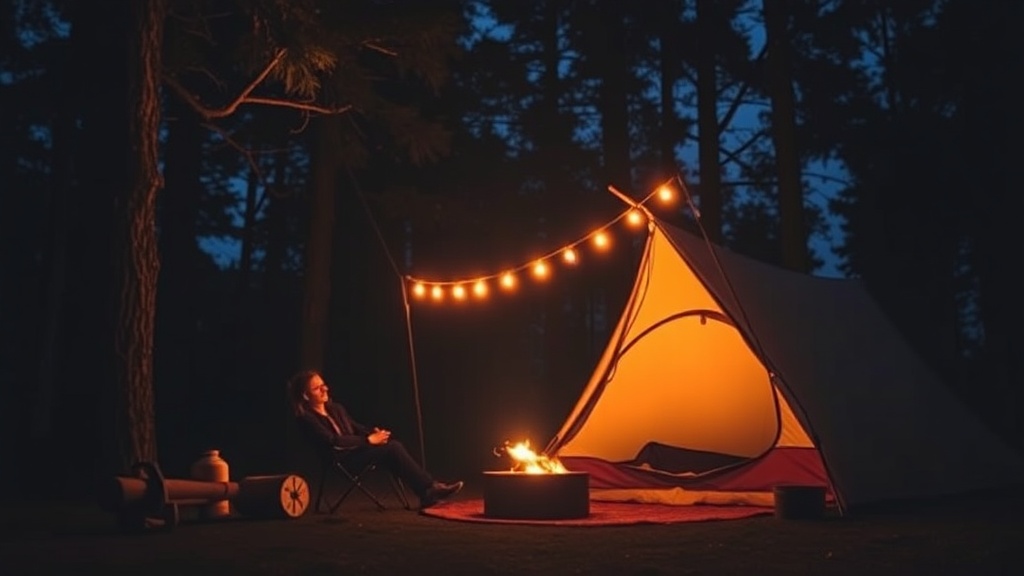
This is your "mood" lighting. It provides a general wash of light over the entire campsite or tent interior. Think of this as your base layer. String lights (like Edison-style LED fairy lights) or a large, soft-glow lantern are perfect for this. This light should be warm and non-intrusive.
Task Lighting
This is focused, bright light used for specific actions. You need a dedicated headlamp for tasks like cooking, reading, or navigating the woods at night. A headlamp like the Petzl Actik Core is much more effective than a handheld flashlight because it keeps your hands free to hold a spatula or a tent pole. Without task lighting, you are essentially working in the dark, which leads to messy cooking and potential spills.
Navigation/Safety Lighting
This is low-level lighting used to mark paths or hazards. This could be a small, battery-operated puck light placed near the tent entrance or a glow stick placed near a tent stake to prevent tripping. This ensures that even when the main lights are off, you can safely find your way around the campsite.
5. Neglecting the "Verticality" of Light
Most campers set their lights on the ground or on a table. This is a mistake. Light that sits low to the ground is easily blocked by your body, your chairs, or your cooler. This creates a "shadow wall" around you, making the campsite feel cramped and dark.
To maximize your visibility, you need to think vertically. Hang your lights. Use the gear loops inside your tent, or use a small portable tripod to elevate your lantern. If you are at a site with trees, use S-hooks to hang your lights from branches. Elevating the light source allows the beams to clear the obstacles of your camp furniture and provides a much wider radius of illumination. This is particularly helpful when you are trying to manage food prep, as it ensures the light reaches the bottom of your pots and pans rather than just the tops.
Summary Checklist for Better Camp Lighting
Before you head out on your next trip, run through this quick checklist to ensure you aren't bringing a "dim and depressing" setup:
- Check the Kelvin Rating: Are your lights "Warm White" (2700K-3000K) rather than "Cool Blue"?
- Verify Battery Levels: Are your batteries fresh, or are you relying on old ones from the junk drawer?
- Audit Your Sources: Do you have at least one ambient light, one task light (headlamp), and one safety light?
- Plan Your Elevation: Do you have hooks, clips, or a tripod to get your lights off the ground?
- Test Diffusion: If you use a high-lumen light, do you have a way to soften the glare?
By treating your lighting with the same level of detail as your meal planning or your gear organization, you will find that the outdoors becomes much more accessible. Good lighting doesn't just help you see; it helps you enjoy the environment and makes the transition from day to night a seamless, stress-free part of your camping experience.