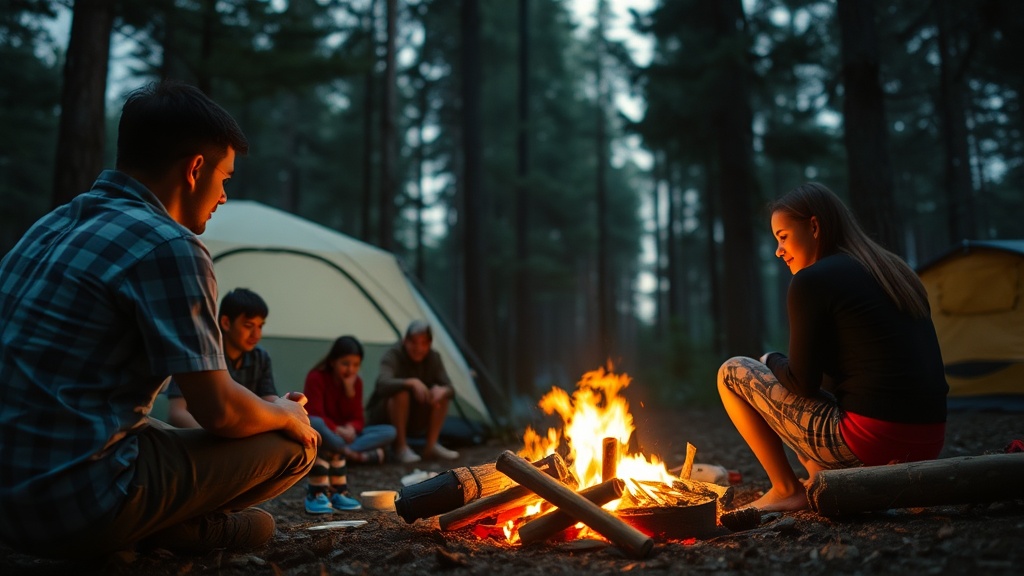
Why Do Some Family Camping Trips Fall Apart While Others Become Core Memories?

The Surprising Psychology Behind Stress-Free Outdoor Adventures
Here's something that might stop you in your tracks: a 2023 study from the University of Minnesota found that families who camp together report 42% higher relationship satisfaction than those who don't—but only when the trip goes smoothly. When things go sideways (and we've all been there), that number plummets below non-camping families. The difference isn't luck or having "outdoorsy genes"—it's preparation. Not the obsessive, color-coded-spreadsheet kind (though I won't judge), but the kind that anticipates friction points before they derail your weekend.
This isn't about becoming a survival expert or dropping thousands on boutique gear. It's about building systems—borrowing from my old project management playbook—that let you focus on what matters: your kids' faces when they spot their first deer, the quiet satisfaction of a meal cooked over flame, the inside jokes that'll last for years. Below are seven field-tested strategies that transform camping from a stress-fest into something you actually look forward to repeating.
What's the One Packing Mistake That Ruins More Trips Than Bad Weather?
Overpacking. Not underpacking—overpacking. When your vehicle becomes a Tetris puzzle of "just in case" items, you create decision fatigue before you've even pitched the tent. Every extra bin means something else to dig through, something else to repack, something else to forget at the campsite.
Here's my Target-honed approach: the 80/20 rule applied to gear. Eighty percent of your comfort comes from twenty percent of your items. Identify your non-negotiables—the sleep system that actually keeps everyone warm, the camp chair that supports a parent who's been hiking with a toddler on their back, the single pot that handles 90% of your cooking. Everything else gets the side-eye.
I maintain a "living packing list" in a shared spreadsheet (old habits die hard). But here's the key—it's organized by activity, not by item type. Instead of a generic "kitchen" section, I have: "Breakfast at Camp," "Lunch on the Trail," "Dinner and Cleanup." This simple shift eliminates that 6 PM panic when you realize you've packed four spatulas but no can opener. The spreadsheet lives in the cloud, so my partner can add items from his phone when inspiration strikes at 10 PM.
How Do You Keep Kids Engaged Without Resorting to Screens?
The first hour after arrival sets the tone. If you're frantically wrestling with tent poles while your kids complain about Wi-Fi signals, you've already lost them. My solution? The "camp setup scavenger hunt." Before we leave home, I prepare a simple checklist with pictures for my non-readers: collect five pinecones, find the perfect marshmallow stick, help identify three types of leaves. They earn small rewards—a choice of bedtime story, first pick of sleeping spots, the honorary title of "Fire Marshal" for the evening.
This isn't bribery—it's scaffolding. Kids need structure, especially in unfamiliar environments. The transition from structured school days to unstructured outdoor time can be jarring. By giving them defined roles during setup, you're easing that transition while actually getting help. My seven-year-old now knows how to stake guylines. My four-year-old sorts tent poles by size. These aren't just chores—they're confidence builders.
Once camp is established, maintain momentum with "activity anchors"—one planned engagement per day, with plenty of buffer for spontaneity. Maybe that's a ranger-led program, a specific trail with a waterfall payoff, or a fishing lesson. The rest of the time? Boredom is the feature, not the bug. Some of the best moments come from unscheduled wandering, from the stick that becomes a wizard's staff, from the ant hill that holds attention for twenty minutes.
Why Does Meal Planning Trip Up Even Experienced Campers?
Here's where my spreadsheet obsession pays dividends. The camp kitchen is where good trips go to die—hungry kids, missing ingredients, a parent frantically slicing vegetables on a cooler lid while mosquitoes feast. It doesn't have to be this way.
I plan meals using a "cook once, eat twice" philosophy. Dinner leftovers become breakfast burrito fillings. Extra grilled vegetables get chopped into trail sandwiches. This minimizes prep work (and cleanup) while maximizing variety. I also embrace the "no-cook lunch"—hummus, pita, pre-cut vegetables, cheese, salami. Assembly only, no flames required. This preserves mental bandwidth for the afternoon's main activity.
The real secret? Prep at home isn't cheating—it's smart. I chop onions and peppers, marinate proteins, pre-mix pancake batter in squeeze bottles. Yes, it takes an extra hour before departure. But that hour buys you sunset-watching time instead of spatula-juggling time. For inspiration on simple, family-friendly camp meals, I often reference the National Park Service's food safety guidelines—they're practical, thorough, and free.
What Should You Do When the Weather Doesn't Cooperate?
Let me be direct: if you only camp in perfect weather, you'll camp maybe four times a year. Rain, wind, unexpected cold—these aren't trip-enders, they're plot twists. The families who stick with camping long-term aren't luckier with forecasts; they're better equipped for variability.
My emergency kit includes more than first-aid supplies. I pack a "rainy day binder"—waterproof card games, laminated nature bingo sheets, a compact craft kit (pipe cleaners and beads weigh nothing but buy hours). For wet weather, synthetic insulation is non-negotiable—down loses effectiveness when damp, and damp kids are miserable kids. I learned this the hard way during a Memorial Weekend deluge in the Catskills. Now everyone has a packable synthetic puffy, no exceptions.
The psychological preparation matters too. We have a family motto: "Embrace the suck, then find the fun." This isn't toxic positivity—it's reframing. Some of our best stories come from the trip where we huddled in the tent during a thunderstorm, playing twenty questions by headlamp. The memory of adversity overcome together bonds more than perfect conditions ever could.
How Can You Make Cleanup Feel Less Like a Punishment?
The drive home is where the goodwill of a great trip evaporates. Everyone's tired, the car smells like campfire and wet socks, and there's a mountain of gear to deal with. I've developed a "departure protocol" that distributes the load and prevents the Sunday-night gear explosion in our garage.
First, the " campsite sweep"—everyone walks the perimeter with a garbage bag, collecting not just our trash but any we find. This teaches stewardship and ensures we leave the place better than we found it. Second, the "dry before you stow" rule—tents get shaken out and air-dried at home before storage. Moldy tent fabric is an expensive mistake you make only once. Third, the "first night back" box—containing pajamas, toothbrushes, and coffee supplies for the morning. Unpacking can wait until after a good night's sleep in your own bed.
I keep a "trip log" in that same shared spreadsheet—what worked, what didn't, what we'd do differently. Before the next trip, we review it. This continuous improvement loop means we're not reinventing the wheel every time. The system gets smarter with each iteration. For families just starting out, the REI family camping checklist is an excellent baseline—I've adapted it considerably, but the foundation is solid.
When Is It Time to Upgrade Your Setup Versus Making Do?
This is the question that separates camping hobbyists from camping families. The gear industry wants you to believe that happiness requires constant upgrading—that this year's tent model will solve last year's frustrations. Sometimes it will. Often, it won't.
My rule: upgrade only after you've identified a specific friction point that recurs across multiple trips. If your sleeping bag is merely "okay" but you sleep fine, keep it. If you're waking up cold and stiff after every trip, that's a legitimate upgrade trigger. Same with chairs, cookware, lighting. The goal isn't the lightest or most expensive—it's the "least thinking required." When your gear becomes invisible, when it just works without fuss, you've hit the sweet spot.
That said, some upgrades are transformative in ways you can't anticipate. A rooftop cargo box eliminated our trunk-packing anxiety entirely. A portable camp shower (just a pressurized garden sprayer, honestly) changed how we approach multi-day trips. A good headlamp with a red-light mode preserves night vision for star-gazing while still letting you find the bear bag. These aren't luxuries—they're force multipliers for enjoyment.
Can Camping Actually Make Your Family Closer?
The research says yes—but with caveats. A 2022 study from the Journal of Environmental Psychology found that shared nature experiences increase "collective efficacy"—the sense that your family can handle challenges together. But this effect only appears when families engage in shared activities, not parallel play on devices.
This is why I push through the initial resistance. The first day is always hardest—adjustment, unfamiliarity, the temptation to retreat to car chargers and comfort zones. By day two, something shifts. Conversations lengthen. Attention spans extend. My kids notice things they'd miss at home: the way light filters through leaves, the sound of a distant owl, the satisfaction of a shared task completed.
Camping strips away the noise—the notifications, the schedules, the endless errands. What's left is each other. Sometimes that's uncomfortable. More often, it's a reminder of why you chose this family in the first place. The spreadsheets and checklists? They're just the on-ramp. The destination is something no algorithm can plan: connection, resilience, and stories you'll tell for decades.