The 36-Hour Rescue Plan for a Family Camping Trip That Hits Rain Instead of Sunshine

The 36-Hour Rescue Plan for a Family Camping Trip That Hits Rain Instead of Sunshine
You know that moment when you roll into a campsite, the air is warm, and then at 1:00 p.m. the sky opens up like someone spilled paint? The kids get quiet, your kitchen plans evaporate, and suddenly you’re staring at wet ground with a tent zipper in one hand and a 3-year-old in the other (or maybe a nearly teenage one with a "this is fine" face).
I still thought I had every scenario covered until a late-April trip where we got soaked on day one and melted into the camp sink by evening. I had a plan, but not a rescue plan. So now every trip has one, and it has saved us. This guide is that exact backup.
Why this post exists
Last year, our “perfect weekend” plan was:
- Easy hikes
- Campfire dinner
- Sunrise shots
- Kids happily digging sticks for six hours
What actually happened was:
- Afternoon thunderstorm
- One muddy pair of boots in the car all week
- One upset kid at 6:00 p.m. because hot chocolate got delayed
- And me realizing I had to choose between “stick to the plan” and “save the trip”
So yes: if you’re looking for perfection, wrong post. If you want a practical way to keep a trip feeling fun when weather turns messy, read on.
The setup: 36-hour framework
I run this as a three-phase rescue: Stabilize, Pivot, Recover.
Phase 1: Stabilize (first 2 hours of bad weather)
Goal: keep everyone warm, fed, and calm before the storm settles in.
- Move people to the driest interior.
- Car, vestibule, picnic shelter, or camper shell. If no shelter, set a tarp over the tent and make one dry zone with blankets.
- Swap wet layers.
- Jackets off. Dry socks on. Put shoes by the fire pit side, not inside the sleeping area.
- Fuel morale quickly.
- Give each child a snack and a hot drink immediately.
- Shorten the trip narrative.
- Tell the kids: "Today is adventure weather day. We are moving to Operation Cozy," not "Everything is ruined."
My hard rule: Don’t continue with the full day plan after hour two unless the weather is improving.
Phase 2: Pivot (next 24 hours)
Goal: create a realistic day with indoor-first options and minimal logistics.
You’re not canceling the trip. You’re switching from exploration to camp control mode.
Core activities that always work in weather
- Tarp-side camp engineering (45–60 min): dry shoes, organize food, dry bedding, inspect straps.
- Campfire + story block (20–40 min): even in rain, a planned end-of-day ritual keeps emotional temperature stable.
- Campground circuit (short walk only): one loop around bathrooms, one short loop at the edge of the lot.
- Low-stress games night: no complicated pieces, no screen-fight arguments.
What to do with a heavy storm day
- If lightning is nearby: stop all exposed metal use, wait out the storm, and avoid isolated trees.
- If rain is steady but not severe: keep a rainproof outer setup and build a wet-to-dry transition zone near entry.
- If wind is high and spray is strong: drop most outdoor tasks, move into a rain shelter, and use this as your “sleep reset day.”
I use a simple rain-day menu because complexity fails faster than kids’ tempers:
- One-pot pasta soup or chili
- Oatmeal cups for breakfast
- Trail snacks pre-portioned in zip bags
If everyone’s hungry and grumpy, your plans are failing by design.
Phase 3: Recover (last 12 hours)
Goal: regain momentum and end the trip on a good note.
Before the storm clears, do this:
- Drying round: hang sleeping bags and layer jackets where ventilation exists.
- Rebuild confidence in the itinerary: keep two simple options for next morning.
- Return to your original plan in a smaller version:
- shorter hikes
- shorter drives
- shorter campfire time
This is how you make a “bad weather weekend” into a “we did the next-best version, and that was still great.”
36-hour rescue schedule (family template)
Use this when rain starts at 2:00 p.m. on Day 1.
Day 1 Evening: 4 p.m. to 8 p.m.
- 4:00–4:30 p.m. — Weather triage + socks/gear swap
- 4:30–5:00 p.m. — Quick meal prep (simple + hot)
- 5:00–5:45 p.m. — Tent area check and dry station
- 6:00–6:45 p.m. — Short, controlled outdoor move (or zero-ambition indoor activity)
- 7:00 p.m. — Warm dinner + short cleanup
- 8:00 p.m. — Bedtime prep without overtalking logistics
Day 2 Morning: 7 a.m. to 11 a.m.
- 7:00–7:20 a.m. — Morning check of weather and forecast update
- 7:20–7:45 a.m. — One indoor game, not a screen marathon
- 8:00–9:30 a.m. — Optional easy loop around campground + interpretive station
- 10:00–10:20 a.m. — Snacks + hydration + regroup
- 10:20 a.m. on — Decide: second outdoor attempt vs controlled rest day
Day 2 Midday: 11 a.m. to 4 p.m.
- 11:00 a.m. — If conditions hold, one short hike (30–45 min).
- 12:00 p.m. — Picnic-style lunch inside a shelter if available.
- 1:00 p.m. — Family backup play block.
- 2:00 p.m. — Pack partial-to-go bag in case camp move becomes necessary.
- 3:00 p.m. — Decide leave time and check-in with everyone (kids included).
Day 2 Afternoon/Evening
- 4:00 p.m. — Start packing early before emotional energy drains.
- 5:00 p.m. — Cleanup ritual and gear check
- 6:00 p.m. — Last shared routine: one game, one song, one bedtime story
- 7:00 p.m. — Evaluate: did we lose time or lose momentum? Usually momentum.
The emergency items I never leave behind
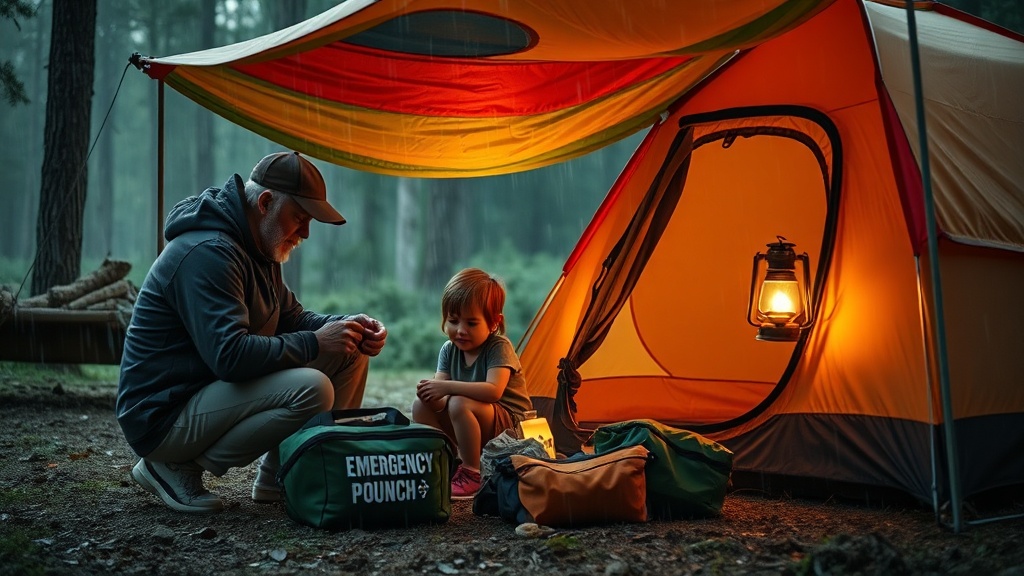
I keep these in a Rain Reset pouch. Not in the trunk. Not on the roof rack. In the same place every trip.
- 4 light waterproof jackets
- 6 extra socks per family
- 2 compact tarps + 1 duct-tape roll
- 2 gloves for adults and 2 for kids (wet hands make everything worse)
- 12 refillable snack packets + 3 candy-safe zipper bags
- Headlamps + extra batteries
- Refillable water bottles and one funnel
- Printed backup activity card deck (I keep these in a Ziploc)
- One thin rope line for hanging blankets in a dry zone
- Foldable bin + zip bag for wet clothing
Not because we overpack. Because we stop losing minutes searching at 6:30 p.m.
What not to bring into a rain-reset weekend
- Three large board games with many small pieces
- Fancy coffee gear (too much cleanup)
- Overweight cast iron with no place to carry it
- Expensive books that get soggy, then disappear
- Fancy shoes for kids (rubber is king)
Honest math: what rain costs in dollars and energy
Let’s be real: bad weather affects cost in small ways.
- Extra fuel stop: 0 to 20 dollars
- Extra snack shopping: 5 to 25 dollars
- Food waste if you planned a full "campfire feast" and then can’t execute: 10 to 30 dollars
- Emotional energy: infinite if not planned
When the weather changes, shift to simpler food. It’s not a downgrade, it’s a control move.
Budget-style contingency checklist for bad-weather camps
Minimum viable rainy-day budget
- Meals you can make quickly: 25–40 dollars
- Waterproof storage: 0 (reuse totes and drybags)
- Extra snacks: 10 dollars
- Activity budget: 0 unless you have a paid interpretive center nearby
- Total: ~35–55 dollars for a full rainy-day rescue weekend
If you’re already carrying an emergency budget in your notes app, you’ll be fine. If not, this is the line item I recommend writing in:
Rain reset buffer: +$40
If you need to buy this one buffer, you’re not failing planning. You’re accounting for reality.
My “no-drama rainline” script
When kids spiral, your voice tone matters more than your backup list.
I use this exact line every trip:
"Weather controls the day, not us. Our plan is now Version 2. The campsite still works, and we still get to have fun."
When you say it like that, they relax. It also reminds me that I don’t need to be the hero who can control rain.
36-hour post-trip debrief (yes, 5 minutes only)
After you get home, do this immediately:
- What kept the family calm?
- What got packed wrong for weather?
- Which activity failed, and what replaced it?
- What should be first in the car next time?
If you skip this, you’ll relive the same avoidable chaos on your next trip.
Why this plan works (for families, not adventure athletes)
Because it accepts uncertainty. Most camping plans fail not from bad weather but from attachment to the original schedule.
This plan gives you three things:
- A decision ladder
- A simpler meal framework
- A way to preserve one enjoyable evening even on a bad day
You won’t always get your planned photos. You will still get a useful trip, a calmer car ride home, and kids who trust that rainy weather is just a plot twist, not a disaster.
You don’t need a perfect weekend. You need a recoverable weekend. That’s how family camps survive the first storms and still become repeat vacations.
You don’t need perfect weather. You need a better plan.
See you at the next campfire.
— Priya