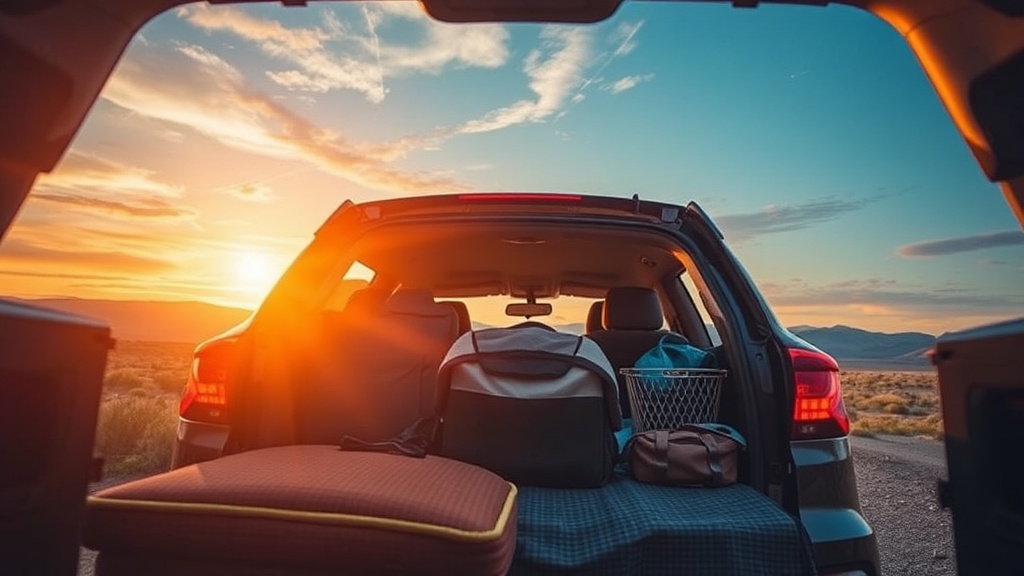
Organizing Your Vehicle Cargo for Long-Distance Road Trips

A single improperly secured item in a moving vehicle can exert over 100 pounds of force during a sudden stop. This isn't just about preventing a broken coffee mug; it's about passenger safety and ensuring your gear actually arrives at the campsite in one piece. When you're hauling everything from a heavy cooler to a bulky tent, the way you stack your cargo determines whether your drive is a relaxing prelude to your trip or a stressful exercise in listening to things slide around in the back. This guide breaks down the systematic approach to loading a vehicle for maximum efficiency and safety.
Efficiency in a car or SUV isn't about cramming as much as possible into every square inch—it's about weight distribution and structural integrity. If you load all your heaviest items in the very back, you might actually affect your vehicle's handling or even your fuel economy. A well-organized cargo area allows you to access what you need without a full-scale excavation of the trunk every time you stop for a stretch.
How should I pack my trunk for maximum safety?
The most important rule of thumb is to keep the heaviest items low and centered. Think of your car as a balance scale. If you put all the heavy camping stoves and cast iron pans at the very back of the trunk, you're shifting the center of gravity backward, which can make the front end feel light or twitchy. Instead, place your heaviest bins—the ones filled with metal tools or heavy cookware—as close to the center of the vehicle (usually the middle of the back seat) as possible. This helps maintain a stable center of gravity.
Once the heavy stuff is centered, use smaller, lighter items like sleeping bags, pillows, or clothing to fill the gaps around the edges. This prevents the heavy items from sliding around during turns. If you have a large, open trunk space, consider using a cargo net or a specialized organizer. A simple mesh net can prevent a medium-sized box from becoming a projectile if you have to slam on the brakes to avoid a deer or a sudden pothole.
- Heavy items: Coolers, water jugs, cast iron, heavy toolboxes.
- Medium items: Tents, folding chairs, camp stoves.
- Light items: Sleeping bags, pillows, clothing, snacks.
For those using an SUV or a hatchback, the vertical space is your best friend. However, never stack items so high that they obstruct your rearview mirror. If you can't see through your back window, you're driving with a blind spot that's far too large. Always ensure your line of sight is clear. You can check the National Highway Traffic Safety Administration website for general tips on vehicle safety and cargo restraint to ensure your setup meets standard safety-conscious guidelines.
What is the best way to organize gear by frequency of use?
This is where my background in project management really comes into play. I treat my car like a mobile warehouse. I categorize gear into three distinct groups: Immediate Access, Daily Use, and Deep Storage. This prevents the dreaded "everything-is-buried" scenario when you arrive at the campsite and just want to get the tent up before the sun goes down.
Immediate Access: This includes things you need the moment you pull into the site. Think of your rain gear, a flashlight, a small first-aid kit, and perhaps a change of clothes for the kids. These should be in a bag that's easily reachable from the backseat or a side pocket, not buried under the tent. If it starts pouring while you're unloading, you'll be glad you didn't have to dig through three layers of plastic bins to find the umbrellas.
Daily Use: This category covers the items you'll use throughout the day, such as your lunch, water bottles, and handheld electronics. These are best kept in a medium-sized bin or a dedicated organizer that sits in a way that doesn't require unloading the whole car to reach. If you're stopping at a rest area or a scenic overlook, you want to be able to grab a snack without a complete reorganization of the vehicle's interior.
<Deep Storage: This is for the heavy-duty gear that stays in the car until you actually reach your destination. Your tent, sleeping pads, large cooking sets, and extra firewood (if you're transporting it) fall into this category. These go at the very bottom and the very back of the cargo area. They are the foundation of your load. By keeping these items separated, you create a logical flow for your unpacking process. It turns a chaotic unloading session into a predictable, step-by-step task.
Can I use specialized organizers for smaller items?
Absolutely. In fact, I highly recommend it. Trying to keep loose cables, small tools, or spices from rolling around in a large bin is a losing battle. Instead, use smaller, clear plastic bins or even heavy-duty zippered pouches. If you're a fan of the "everything in its place" philosophy, these smaller containers allow you to label your gear. A bin labeled "KITCHEN - TOOLS" is much more helpful than a generic bin that might also contain your camping lights or a half-empty bag of charcoal.
For long road trips, I also suggest a dedicated "driver's kit." This is a small bag that stays within arm's reach of the driver's seat. It contains things like a charging cable, a small flashlight, a notepad, and perhaps some hand sanitizer. This keeps the main cargo area strictly for camping-related gear and keeps your personal essentials from getting lost in the sea of nylon and canvas in the back.
If you're traveling with a van or an RV, the organization becomes even more critical because your living space and your storage space are often the same. You'll want to look into specialized storage solutions designed for mobile living. Many outdoor retailers like REI offer various organizational tools and small-scale storage bins that are much more durable than standard household plastic. These are designed to withstand the constant vibration and movement of a moving vehicle.
When loading your vehicle, remember that weight and space are your two biggest constraints. You can't just keep adding things indefinitely. Every item you bring should have a purpose. If you find yourself packing "just in case" items that you rarely use, it might be time to leave them at home. A lighter load isn't just easier to pack; it's safer for your vehicle and more fuel-efficient for your trip. A disciplined approach to loading ensures that you spend less time wrestling with your car and more time enjoying the great outdoors with your family.