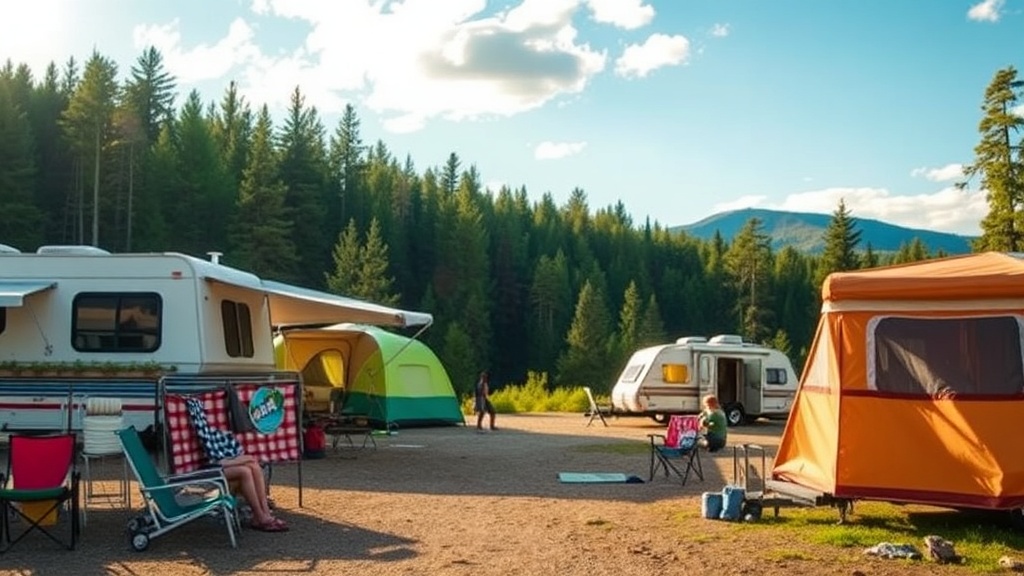
A Systematic Approach to Selecting the Right Campground for Your Family

Why Campground Selection Determines Your Success
Roughly 60% of first-time campers cite "unforeseen site limitations" as their primary reason for not returning to the outdoors. This isn't just about a bad review; it's about the difference between a peaceful morning and a logistical nightmare involving a broken water pump or a lack of shade. Choosing a site isn't just about picking a location on a map—it's about matching the physical infrastructure of a campground to the specific needs of your family unit. When you select a destination, you're actually selecting the level of difficulty for your entire trip. A poorly chosen site can turn a simple weekend getaway into a series of constant troubleshooting sessions (and let's be honest, nobody wants to spend their vacation fixing things instead of enjoying the view).
Whether you're driving a massive RV or a small sedan with a rooftop tent, the ground beneath you matters. If you don't account for the technical requirements of your vehicle and the physical needs of your kids, you'll find yourself spending more time in the car than under the stars. This guide breaks down the selection process into manageable, data-driven steps so you can stop guessing and start planning with precision.
What Amenities Do I Actually Need for a Family Trip?
It's easy to get distracted by shiny lists of features, but you need to filter amenities through the lens of your family's daily routine. A high-end RV resort might offer a swimming pool, but if your kids are more interested in hiking trails, that extra cost might be wasted. I like to categorize amenities into three tiers: non-negotiables, convenience boosters, and luxury extras.
- Non-negotiables: These are the things that keep the peace. For many, this means reliable potable water, proximity to clean restrooms, and a level surface for parking.
- Convenience Boosters: Think about things like Wi-Fi (even if you don't plan on using it, it's a lifeline if a kid's tablet breaks or you need to check a weather update) or proximity to a general store.
- Luxury Extras: These are the "nice-to-haves" like fire pits, laundry facilities, or playground equipment.
Don't fall into the trap of assuming every campground is created equal. A state park might offer incredible scenery but minimal amenities, while a private KOA might offer every luxury imaginable but feel a bit too crowded for a true wilderness experience. Check the National Park Service website for specific details on terrain and facility types before you book. You want to know if you're looking at a gravel pad, a dirt site, or a concrete slab—this dictates everything from how you pack your leveling blocks to how much work you'll do setting up the tent.
How Do I Check Campground Reviews for Reliability?
Standard star ratings can be deceptive. A place might have a 4.5-star rating because the view is beautiful, but if the showers are broken 50% of the time, your family's experience will be a 1-star reality. When reading reviews, look for specific, recurring keywords. If you see the word "loud" or "unpaved" appearing frequently, take that as a warning sign. I always look for mentions of site spacing; you want to know if you're going to be sitting three feet away from a stranger's generator all night.
A good trick is to look for the most recent reviews first. A campground that was great in 2021 might have seen a change in management or a decline in maintenance by 2024. If you're looking for technical data, search for reviews that mention specific equipment like "generator use" or "hookup availability." This gives you a clearer picture of the actual infrastructure. If you're planning a road trip through various state parks, I recommend using Google Maps to look at satellite imagery of the sites. Seeing the actual layout of the trees and paths can tell you more about the site's privacy than any written description ever could.
Is a Developed Campground Better Than Boondocking?
The debate between developed campgrounds and boondocking (camping in a remote area without amenities) is really a debate about your tolerance for troubleshooting. For families with young children, a developed campground acts as a safety net. If you run out of ice, there's a store nearby. If a kid gets a scraped knee, there's a paved path to get back to the car. If you're looking for a sense of isolation and total silence, boondocking is the way to go, but it requires much more rigorous preparation and a much higher level of gear reliability.
| Feature | Developed Campground | Boondocking / Dispersed |
|---|---|---|
| Water/Power | Available at site | Must carry your own |
| Restrooms | Shared facilities | None (portable toilet needed) |
| Noise Level | Moderate to High | Very Low |
| Setup Complexity | Medium | High |
| Social Interaction | High | Minimal |
If this is your first trip with the kids, start with a developed site. It's much easier to learn the basics of campfire cooking or tent setup when you aren't worried about finding a restroom in the middle of the night. Once you've mastered the art of the "home base" at a campground, you can start experimenting with more remote locations. Think of a developed campground as your training ground.
One final piece of advice: always check the weather and the terrain. A beautiful campsite on a map can become a muddy pit if it's been raining for three days straight. If you are staying in a tent, a site with heavy tree cover is a blessing in the heat but a potential hazard during a storm. Always have a backup plan—a "Plan B" for where you'll go if the site is too wet or the wind picks up. This kind of mental preparation is what turns a potential disaster into a successful, repeatable adventure.