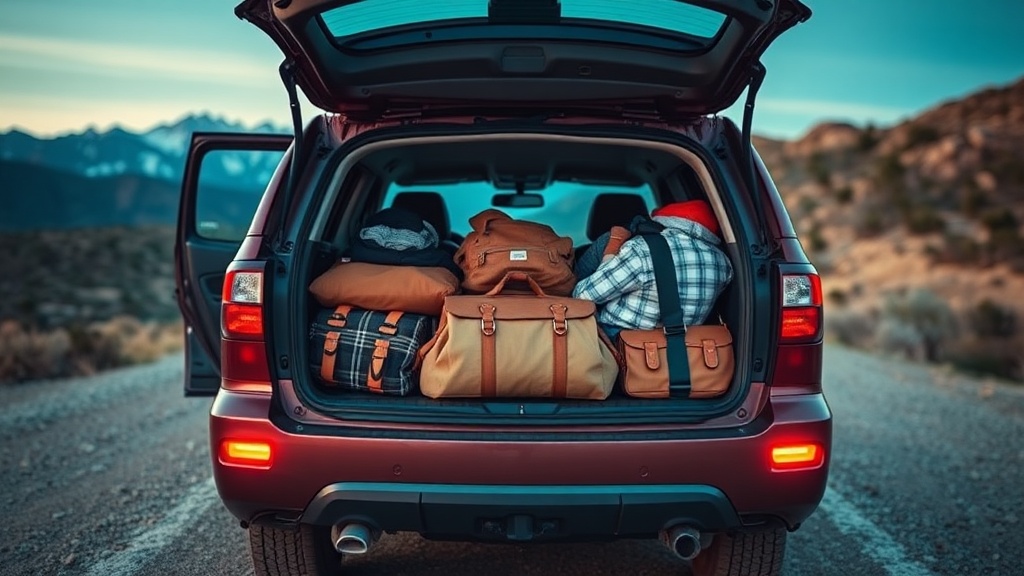
A Systematic Approach to Packing Your Vehicle for Long Road Trips

Picture this: You’ve spent months planning the perfect route, your kids are finally excited about the upcoming trip, and you’ve even color-coded your snack bins. Then, you try to close the trunk of your SUV, only to find that your cooler is pushing against the tent bag, and your sleeping pads are sliding into the footwell. It’s a chaotic mess that makes every mile feel longer and every stop more stressful. Packing a vehicle for a multi-day camping trip isn't just about fitting things inside; it’s about spatial management and weight distribution to ensure a safe, smooth drive.
When you’re hauling a heavy load of gear, how you arrange that weight matters. A poorly packed car can affect your vehicle's center of gravity, making it harder to steer through sharp turns or stay stable during high winds. I treat my car packing like a product launch—every item has a designated place, a specific weight class, and a reason for being there. If it doesn't serve a function or fit within the designated zone, it stays home.
How do I pack my car for a camping trip safely?
Safety starts with where you place your heaviest items. You want the heaviest gear—think your large cooler, water jugs, and heavy bins—to sit as low as possible and as close to the center of the vehicle (between the axles) as you can manage. This keeps the weight from shifting too much during turns and prevents the car from feeling "top-heavy." Avoid stacking heavy items on top of lightweight ones, as a sudden brake can crush your soft sleeping bags or break your delicate kitchen gear.
I always follow a "heavy to light" hierarchy. My strategy involves three distinct layers:
- The Foundation: Heavy, bulky items like the large cooler, large water containers, and heavy plastic bins. These go at the very bottom.
- The Middle Layer: Medium-weight items like sleeping pads, camp chairs, and smaller storage bins. These fill the gaps left by the heavy gear.
- The Top Layer: Lightweight, soft items like sleeping bags, pillows, and clothing bags. These sit on top to act as a buffer.
A common mistake I see is packing things in the way that blocks your rearview mirror. If you can't see out of your back window, you're asking for trouble on a winding mountain road. Always leave a small gap or use a cargo net to ensure your visibility remains clear. If you're using a roof rack, remember that adding weight to the roof raises your center of gravity, which can make the car feel more prone to swaying. Check your vehicle's manual for the maximum roof load capacity—it's a number you shouldn't ignore. You can find detailed vehicle weight specifications through the National Highway Traffic Safety Administration to ensure your setup is within legal and safe limits.
Where should I store frequently used items?
Nothing ruins a mood faster than having to dig through three different bins just to find the flashlight or the bug spray. I divide my gear into "access zones." The first zone is the "Immediate Access" area—this includes things you might need during the drive or the first ten minutes of setup. This might be a small bag of snacks, a first-aid kit, or a change of clothes for the kids. These items stay in the cabin or the very top layer of the trunk.
The second zone is the "Daily Use" area. This is for items like the camp stove, the lantern, and the main food bins. These should be easily reachable once you arrive at the campsite but shouldn't be in the way while you're driving. The third zone is the "Deep Storage" area. This is for the things you only need once a day or once a week, like your extra bedding, heavy-duty tools, or the large tent. These go in the deepest, most protected parts of your vehicle.
| Zone | Items Included | Ideal Location |
|---|---|---|
| Immediate Access | Snacks, wipes, first-aid, small flashlight | Passenger footwell or top seat pocket |
| Daily Use | Cookware, stove, coffee, main food bin | Outer edges of the trunk/cargo area |
| Deep Storage | Tent, sleeping bags, heavy tools, extra water | Center bottom of the vehicle |
Organizing this way ensures that you aren't digging through a pile of stuff in the dark when the sun goes down and the bugs start biting. It turns a potentially frustrating task into a quick, efficient process.
How can I keep my gear organized inside the car?
To keep things from shifting during the drive, I rely on more than just gravity. Using clear, stackable bins is a game-changer for visibility. When you can see exactly what is inside a bin without opening it, you save so much time. I also love using packing cubes for clothing—they compress the air out and keep everything from becoming a wrinkled mess in a single large duffel bag. For the smaller, messy stuff like tent stakes or spices, I use small, hard-sided containers to prevent them from being crushed.
One of my favorite tools is the heavy-duty bungee cord or a cargo net. Even if your gear fits, it can still slide around during a sharp turn. Securing your bins with a net prevents them from becoming projectiles if you have to brake suddenly. If you're using a van or an SUV with a lot of vertical space, consider using a tiered shelving system or even hanging organizers to keep small items off the floor. This keeps the floor area clear and prevents things from getting stuck under the seats.
For more advanced organization ideas and specialized gear reviews, the REI Co-op website is a fantastic resource for seeing how professional travelers manage their load-outs. They often have great examples of how to pack specifically for different vehicle types.
Don't forget the "mental load" of packing. Before you leave, I always do a quick "dry run" of my packing. I lay everything out on the driveway or the garage floor to see exactly how much space I'm actually using. This prevents the last-minute realization that you've overpacked and can't actually close the hatch. A well-packed car isn't just about fitting everything; it's about being able to find exactly what you need, exactly when you need it, without the stress.